The Space In-Between
How boundaries create trust, safety, and the space for real connection

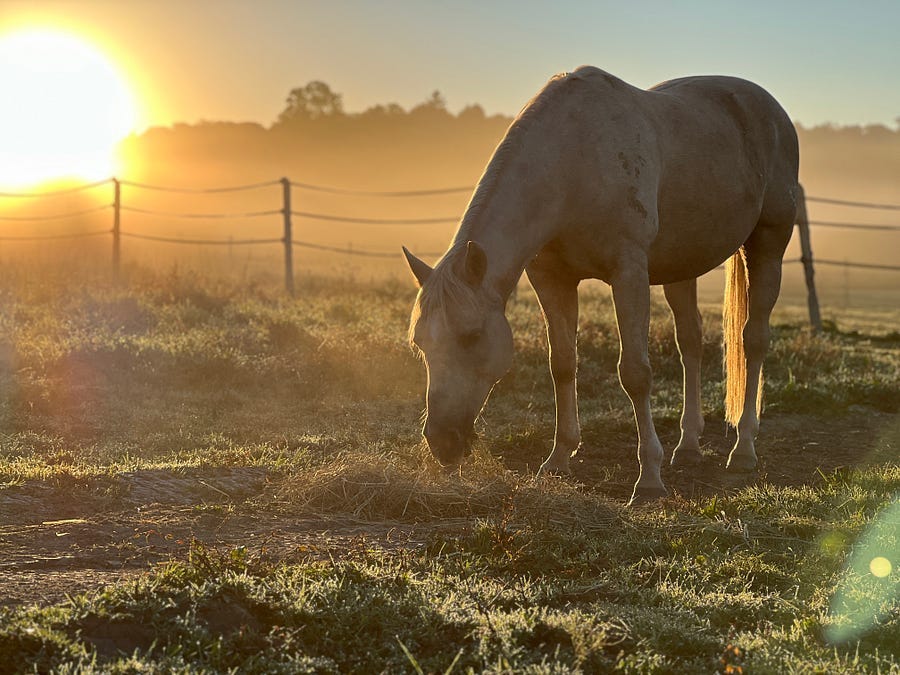
Out beyond ideas of wrongdoing and rightdoing, there is a field. I’ll meet you there.
— Rumi
The Relational Field
Rumi’s field is a kind of relational space. A way of being together rooted in presence, awareness, and connection. In this space, judgement falls away and we meet as we truly are. Real connection doesn’t happen while we are performing, managing ourselves, or trying to prove we have it all together. It happens when we are present.
For those of us with trauma histories, that presence is not easy. Trauma teaches our nervous systems to anticipate harm — to stay on alert, always scanning for cues of threat. Even calm, well-intentioned attention can feel unsafe.
The field Rumi refers to may be available, but it doesn’t always feel accessible. Entering it takes courage. It requires letting the body settle without bracing for what might happen next or pulling away.
The same is true with horses. In relational space with a horse, there is no judgement, no concept of right or wrong — only what is happening in the moment. Connection unfolds through nervous‑system regulation, presence, and attunement.
This shared field of awareness — relational space — is a felt one. Two nervous systems respond to each other’s breathing, energy, and sense of safety. The connection happens at a level far deeper than words. Long before we think about what’s happening, a rhythm forms.
Horses show us how to enter this field with them and how to recognize it with people too.

Trauma, the Nervous System, and Connection
Relational trauma taught me to stay on guard. I learned to expect inconsistency or withdrawal, and to scan for signs that I was safe. Over time, I stopped responding to what was actually happening and instead responded to what I feared might happen. It made relational cues harder to read and real presence harder to access.
Horses notice this immediately. They read our nervous system before our behaviour. Any subtle pressure for them to respond, reassure, or to connect registers in their bodies. As prey animals, they often respond to that pressure by moving away.
Connection grows in small moments — tiny shifts and brief pauses. Trauma makes it easy to miss them while the system is bracing for rejection. Safety starts to feel conditional. If they respond a certain way, I’m okay. If they don’t, I’m not.
Horses don’t respond to conditional safety. They respond to clarity, groundedness, and consistency.
That’s why relational work with horses has been so powerful for me. Again and again, they teach my nervous system — in a gentle, wordless way — that safety doesn’t have to be earned and that connection can exist in presence alone.
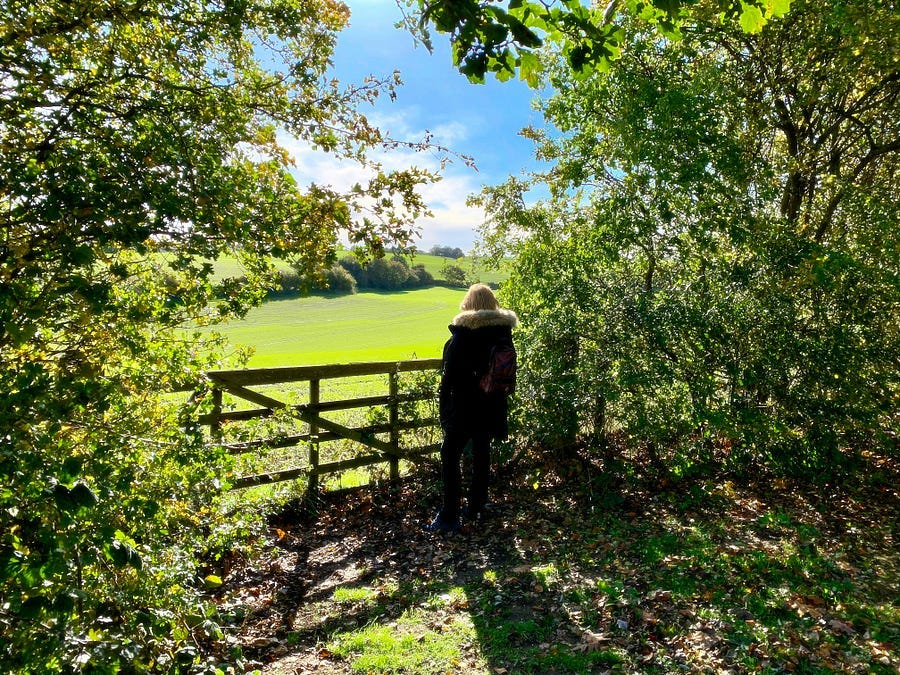
Boundaries in the Field
My visit to Horse Sense North began with a conversation about our heart, brain, and nervous system being in sync or out of sync. We discussed how quickly these shifts happen, how they communicate subtly, and how we sometimes override them.
A heart‑rate variability monitor made those shifts visible: green for calm, blue for settling, and red for alert. A simple change in tone could move me from green to red, registering in my body before my mind processed it. With intention and breath, I could return to calm. Seeing the monitor confirm what I felt was validating. My body was telling the truth — and the horse would feel that truth too.
When we arrived at the arena, the wind was blowing, and snow pellets and debris were hitting the metal siding. Flurry, a horse waiting inside, was unsettled, mouthing the chain on the arena gate.
Carmen, the equine-assisted learning facilitator, explained that nibbling was a self-soothing fidget and showed me how to set a boundary around nibbling with a steady hand, creating space.
When I stepped into the arena, Flurry tested me immediately. For the first time in a long while, I held my boundary without hesitation or fear of losing connection. I simply said no — with my body and my actions. He respected it.
We walked together for a while, adjusting to each other’s rhythms and space. When I entered his space and he did not want me there, he’d either try to nibble or leave. I responded with awareness.
When a sudden noise startled us both and Flurry bolted, I grounded myself by breathing and staying in place. He returned to the space quickly, and we co-regulated. That moment showed me that storms will come, inside and outside, but we can return to calm. Presence doesn’t require more than presence. We can stay connected through the disruption. We can find our way back.
By the end of the session, I understood something that I’d never fully embraced: boundaries are necessary. I’d worried they would create disconnection, yet with Flurry, the opposite happened. The clearer I was, the safer he felt, and the safer he felt, the more connected we became. Boundaries are clarity, and clarity creates safety. Trust begins with the courage to say: This is my space. This is what I need.
Energetic Boundaries
On another day, I returned to the farm, and a younger horse noticed me from a distance. I was standing far enough away from the pen but close enough to notice him lift his head, look toward me, and make a few soft nods.
I didn’t take those gestures as a greeting in the human sense or an invitation to come closer. It was more: I see you, I’m aware of you, and you’re not a threat. He returned to grazing. Nothing more happened or needed to. We shared the same attentional field; a moment of mutual awareness across distance, co‑presence without contact. I didn’t need to do anything; I was seen.
When boundaries are respected and attention is regulated, trust arises. In that trust, vulnerability and connection happen — the field Rumi refers to unfolds naturally.
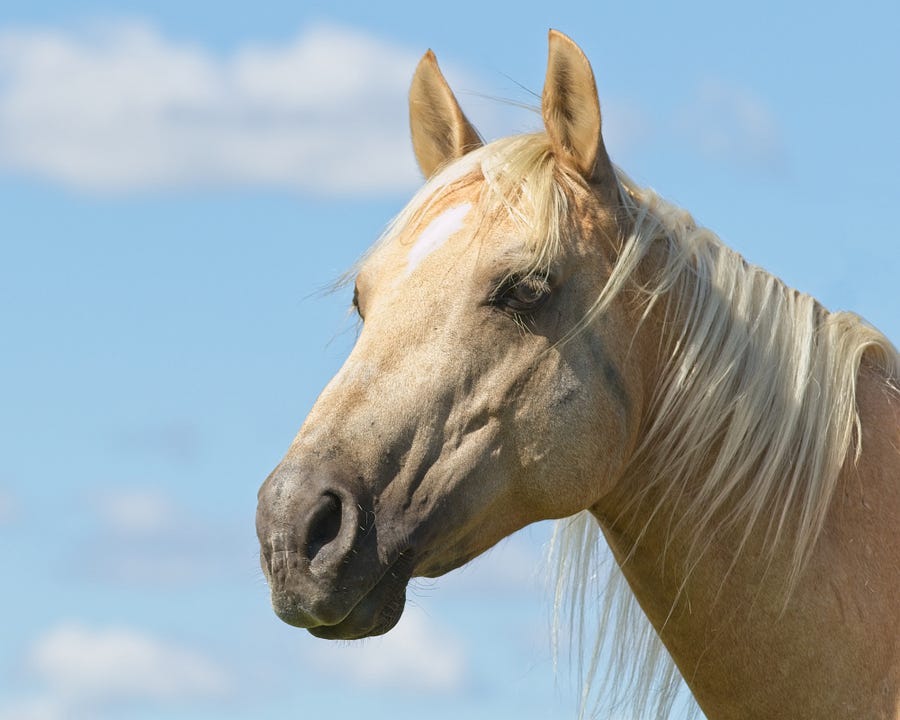
Flurry and the Space Between
Before entering the arena, Carmen talked about the heart’s electromagnetic field and the different layers of energy around horses’ bodies and how they help us to notice boundaries. Flurry was sensitive to these invisible layers. Subtle shifts in his body language told us about his level of comfort, curiosity, or tension.
The goal of this session was to explore my relationship with Flurry through the lens of the layers, moving back and forth and responding to his cues.
As I stepped toward him, I watched for the smallest signs: an ear twitch, a shift of weight, a softening of breath, or nibbling at the gate. I felt the layers in my own body as much as I could see them in his. Stepping inside his field felt like entering a delicate web. It emphasized how much my energy mattered.
Sometimes he approached; sometimes he paused. When he pushed into my space, I held my boundary with clarity . A simple no reinforced by my body. He respected it. He tested again, and each time I stayed clear, the connection deepened. The space between us felt safer. When Flurry realized the boundaries were solid, he relaxed as though to say, okay, you’ve got me.
Connection can happen at a distance. Flurry didn’t want me close all the time. He wanted space — and when I honoured that space, he trusted me. Giving space didn’t withdraw connection; it actually created it.
There were moments of uncertainty — was I reading him correctly? Should I move forward or step back? But each time I grounded myself, shifting from thinking to being, the uncertainty dissolved. I could feel his energy shift and mine in response. Learning to attune in real time was both learning and unlearning.
I also noticed that my initial impulse was to always give more space than Flurry needed. But in staying attuned, what he needed became clear. We co-created a space of calm and safety — Flurry’s need to self-soothe lessened.
At one point, he circled widely, creating a large space. I might have interpreted that as withdrawal if I hadn’t understood energetic boundaries. Instead, I stayed present and recognized it as needing space. Without me reaching or pressuring him to return, he slowly came back — he felt safe enough to choose closeness. By the end, we shared spatial closeness without any signs of anxiety. That’s connection — that’s the field.
All beings want connection, but the space they need differs — and my own need for space is valid. Flurry taught me that when I am clear, he can trust me. When I hold boundaries, he can relax. When I stay grounded, he can soften. When I give space, he can connect.
What emerged from this experience is this: trust comes from boundaries. Safety comes from clarity. Connection comes from space. In that space — the space in-between — the field appears. It arises when we hold clear boundaries, honour space, regulate ourselves, and meet one another, as we are, without performance.
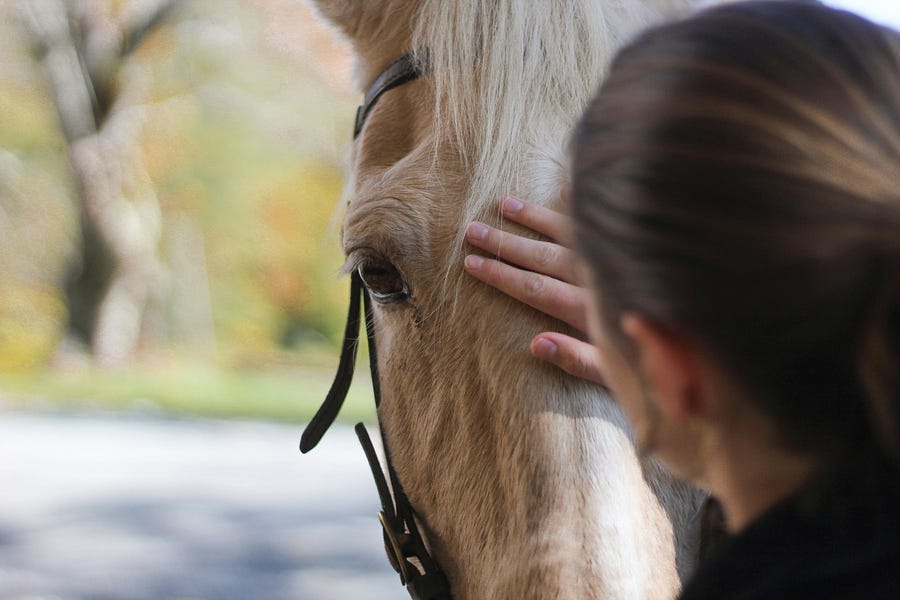
The Field of Connection
One of the most important things Flurry taught me is that I can’t make a moment of connection happen. I can only show up in a way that makes it feel safe.
With horses, regulation comes before relationship. It starts in the body, not the mind. Before entering the pen, I learned to check in with myself — notice where I was tight or holding — and settle my body first. Flurry felt that immediately.
Even the slightest internal shift created the opportunity for tension between us. When I softened and eased back, Flurry did too. He wasn’t responding to what I wanted — he was responding to how regulated I was. My attention needed to be open, with no expectation or pressure. Just space for both of us to be as we were.
And when the moment ended, it ended. There was no need to hold on to it or make it mean something more. The session was not about interpretation; it was about noticing. Was he settled? Was I? That was it.
Flurry mirrored a relational skill I have spent years trying to understand: we don’t have to reach for relationships. When we are present, we can simply just be.
When I first began the Horse Sense North journey, I thought I was learning about how horses interact with humans — that I’d build self-confidence with a few practical tools. What is unfolding is far deeper. I am learning about myself: how I show up, how I hold space, how I set boundaries, and how I allow connection.
The field Rumi names is relational and embodied. It emerges when we choose presence over performance and hold boundaries with clarity and consistency. The field deepens when space is respected and when the nervous system feels safe enough to settle.
Space and boundaries are not obstacles to connection — they create trust. That is the foundation of connection. That is the field.
And it is created, moment by moment, through the courage to hold space — mine, yours, and what’s in‑between.
If you are interested in reading more about equine-facilitated learning, connect here: Horse Sense North.
If you would like to read more about my personal journey with Wilbur (the pony who met me first) you are most welcome to use the link below.
